Fire Suppression System Inspection & Testing Fort George Bronx
Master Fire Mechanical provides commercial kitchen fire suppression system inspection, testing, maintenance, repair, and compliance support for schools, daycare centers, churches, restaurants, senior facilities, institutional kitchens, and smaller food-service operations throughout Fort George, the Bronx, Manhattan, and New York City.
244 5th Ave p255
New York, NY 10001
(917) 336-8116
https://masterfiremechanical.com
Compact Commercial Kitchen Fire Suppression System at Fort George Universal Pre-K
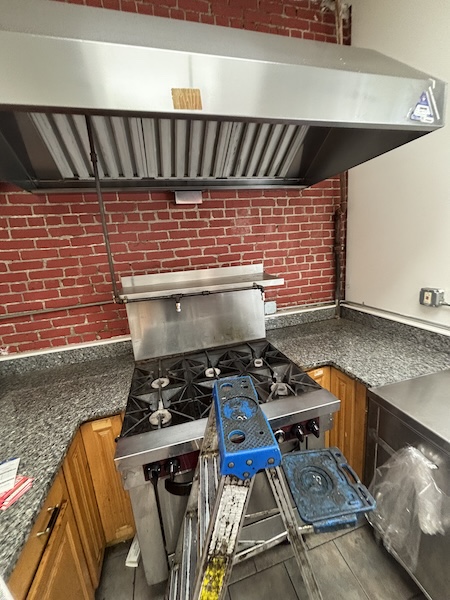
Master Fire Mechanical inspected and serviced the commercial kitchen fire suppression equipment at Fort George Universal Pre-K, located at 489 St. Paul’s Place in the Bronx. The kitchen uses a compact, pre-engineered wet chemical fire suppression system designed to protect a commercial cooking range, hood, plenum, duct area, and related cooking hazards.
This type of smaller fire suppression system is commonly installed in schools, daycare centers, churches, community facilities, senior centers, staff cafeterias, institutional kitchens, and smaller restaurants. Although the cooking line is more compact than a large restaurant installation, the system still requires proper inspection, testing, maintenance, documentation, and appliance coverage.
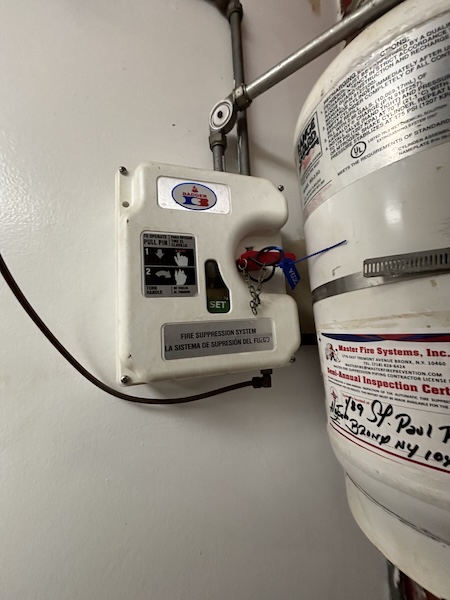
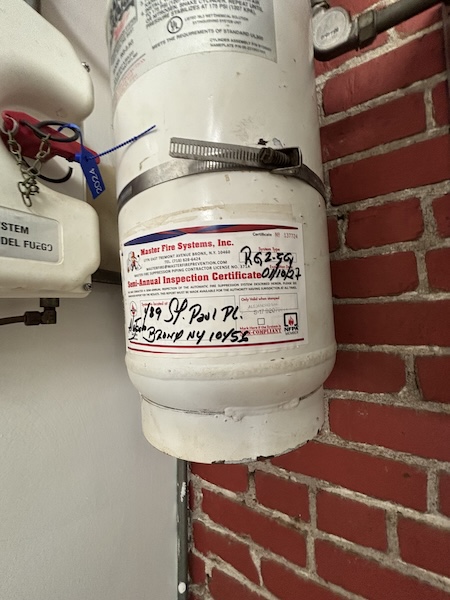
The installation includes an Amerex mechanical release assembly, a wet chemical agent cylinder, a cartridge-operated control mechanism, mechanical detection cable, fusible links, appliance nozzles, hood and duct protection, a manual pull station, and a mechanical gas shutoff connection. These components work together to detect excessive heat, discharge wet chemical agent, interrupt the fuel supply, and suppress a cooking fire before it spreads through the hood or exhaust duct.
During the inspection, the mechanical release assembly was opened and reviewed so the internal linkage, springs, cable connections, cartridge assembly, set-and-release mechanism, and related moving components could be visually examined. The inspection also included review of the agent cylinder, system condition, inspection certification, actuator components, and the connections serving the kitchen cooking line.
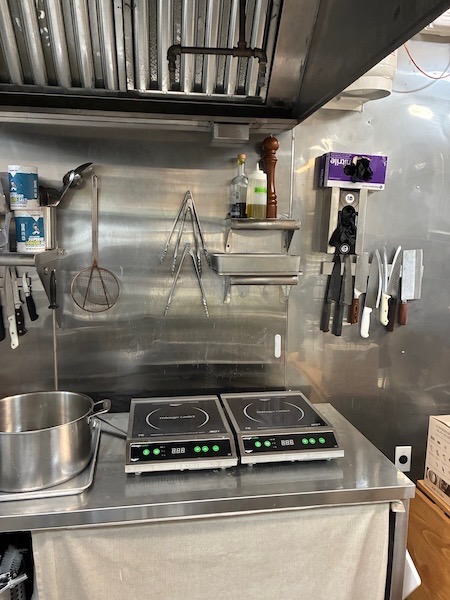
The cooking area contained a commercial six-burner range beneath a stainless-steel exhaust hood. The appliance nozzles, hood protection, duct opening, detection line, and fusible-link arrangement were reviewed to confirm that the system remained positioned to protect the cooking equipment and exhaust path. Appliance movement, nozzle obstruction, missing caps, damaged links, grease accumulation, or improper coverage can reduce system effectiveness and create inspection deficiencies.
The system also incorporates a mechanical gas valve actuator. When the suppression system activates, the gas supply serving the protected cooking appliances must shut down as designed. Fuel shutoff is a critical part of commercial kitchen fire protection because continued gas flow can intensify a fire after suppression agent has discharged.
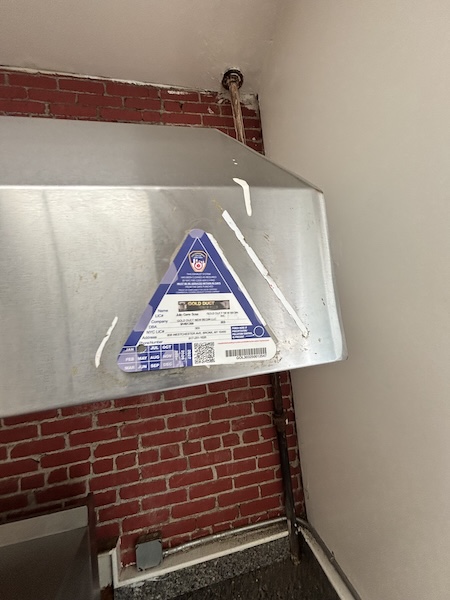
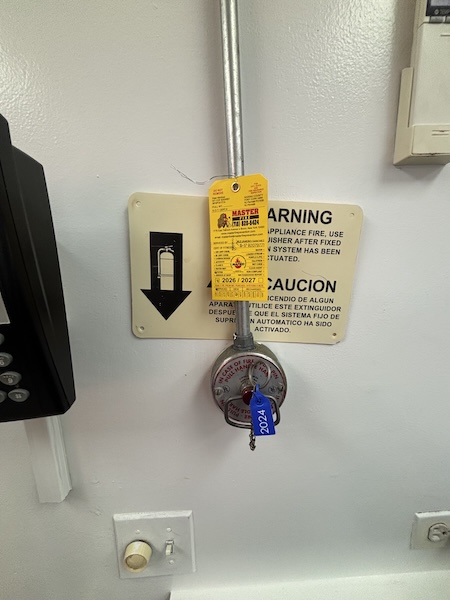
A manual pull station was installed in an accessible location so staff can activate the system if a fire is observed before the automatic detection system responds. The pull station, safety seal, inspection tag, activation instructions, and surrounding access area were reviewed as part of the overall inspection.
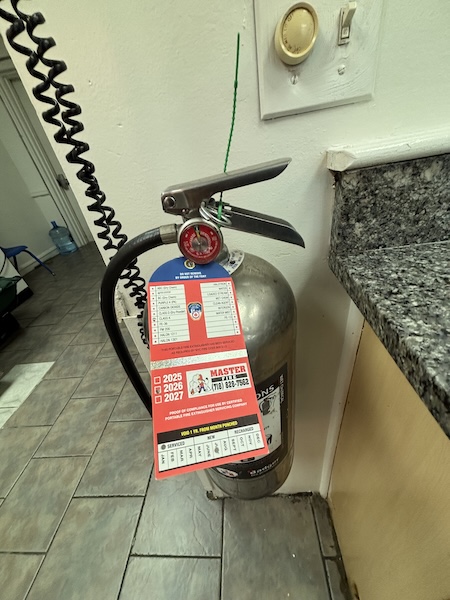
A portable Class K fire extinguisher was also present near the cooking area. Class K extinguishers are designed for fires involving commercial cooking oils and fats and provide an important secondary layer of protection. The extinguisher condition, pressure indication, inspection tag, accessibility, and placement should remain part of the facility’s regular fire safety review.
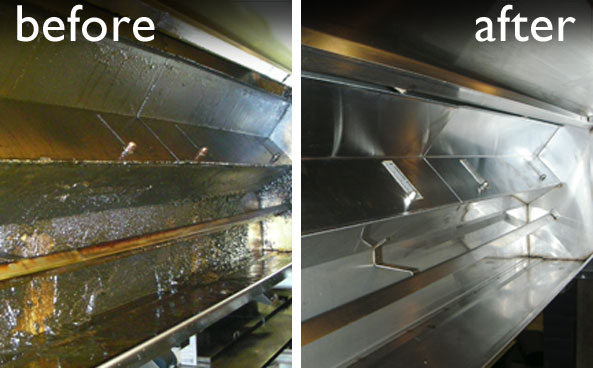
The hood and exhaust area also displayed evidence of professional cleaning and service documentation. Fire suppression inspection and hood cleaning are separate services, but they are closely related. Grease buildup inside the hood, filters, plenum, fan, or duct system can increase fire risk and interfere with the effectiveness of the suppression system.
This Fort George Universal Pre-K project demonstrates why smaller commercial kitchens require the same professional attention as large restaurants. A compact system may use fewer nozzles and protect fewer appliances, but it must still be inspected, tested, maintained, documented, and matched to the actual cooking hazards beneath the hood.
Commercial Kitchen Fire Suppression Inspection in Fort George Bronx
Commercial kitchen fire suppression system inspection and testing in Fort George Bronx is necessary for schools, daycare centers, restaurants, churches, senior facilities, community centers, cafeterias, and other buildings that operate commercial cooking equipment. Even a small kitchen with one range and one exhaust hood can produce grease, heat, open-flame, and fuel-related hazards that require properly designed and maintained fire suppression protection.
Master Fire Mechanical inspects compact and full-size commercial kitchen fire suppression systems throughout the Bronx, Manhattan, and New York City. Common inspection issues include overdue service, missing tags, damaged fusible links, blocked nozzles, moved appliances, incorrect nozzle coverage, low or questionable cylinder condition, damaged pull stations, inaccessible components, grease accumulation, failed fuel shutoff connections, and incomplete inspection documentation.
Properties in Fort George and surrounding Bronx neighborhoods may include older schools, religious facilities, converted residences, community institutions, mixed-use buildings, and smaller food-service spaces. These facilities often use compact fire suppression systems that receive less attention than large restaurant systems. Regular inspection, testing, and maintenance help verify that the agent cylinder, release mechanism, detection system, manual pull station, appliance nozzles, hood protection, duct protection, gas shutoff, and portable extinguishers remain ready for emergency operation.

Frequently Asked Questions About Smaller Commercial Kitchen Fire Suppression Systems
Do small commercial kitchens need fire suppression systems?
Yes. A smaller kitchen may still require a commercial kitchen fire suppression system when it uses grease-producing cooking appliances beneath a commercial exhaust hood. System requirements depend on the equipment, hood design, cooking hazards, building use, and applicable fire and mechanical codes.
What type of fire suppression system was inspected at Fort George Universal Pre-K?
The kitchen uses a compact, pre-engineered wet chemical commercial cooking fire suppression system with mechanical detection, a release assembly, agent cylinder, appliance nozzles, hood and duct protection, a manual pull station, and mechanical gas shutoff.
What is checked during a commercial kitchen fire suppression inspection?
The inspection may include the agent cylinder, control head, cartridge, mechanical release, detection cable, fusible links, nozzles, nozzle caps, piping, pull station, hood coverage, duct protection, appliance alignment, fuel shutoff, inspection tags, service records, and related portable extinguishers.
Why are appliance nozzles important?
Appliance nozzles direct suppression agent toward specific cooking hazards. If appliances are moved, replaced, or rearranged, the existing nozzles may no longer provide correct coverage. Nozzles can also become blocked, damaged, uncapped, or contaminated by grease.
What does the gas shutoff do when the system activates?
The gas shutoff interrupts fuel to protected cooking appliances when the fire suppression system discharges. This helps prevent continued gas flow from feeding the fire after wet chemical agent has been released.
Why is a Class K extinguisher needed near a commercial kitchen?
A Class K extinguisher is designed for fires involving commercial cooking oils and fats. It provides secondary manual protection, but it does not replace the automatic commercial kitchen fire suppression system installed beneath the hood.
Do school and daycare kitchens need regular fire system inspection?
Yes. Schools, daycare centers, universal pre-K programs, churches, and community facilities must maintain commercial kitchen fire protection equipment according to applicable inspection schedules, manufacturer instructions, fire code requirements, and local authority expectations.
| System Component | Function | Inspection Concern |
|---|---|---|
| Wet Chemical Agent Cylinder | Stores the suppression agent discharged over commercial cooking appliances and into protected hood or duct areas. | Cylinder condition, inspection certification, mounting, connections, labeling, and service status. |
| Mechanical Release Assembly | Receives the detection or pull-station signal and initiates system discharge and fuel shutoff. | Springs, cable connections, cartridge, set-and-release mechanism, moving parts, and enclosure condition. |
| Fusible Links and Detection Cable | Detect excessive heat and trigger automatic system activation. | Link age and condition, cable tension, detector placement, grease contamination, and proper routing. |
| Appliance, Hood, and Duct Nozzles | Direct suppression agent toward cooking equipment, the hood plenum, and exhaust duct hazards. | Correct nozzle type, aim, caps, obstruction, appliance alignment, piping condition, and coverage. |
| Pull Station and Gas Shutoff | Allows manual activation and interrupts fuel to protected cooking appliances during discharge. | Accessibility, labeling, tamper seal, activation cable, actuator condition, valve connection, and inspection tag. |
Commercial Kitchen Fire Suppression Service for Fort George and the Bronx
For commercial kitchen fire suppression system inspection and testing in Fort George Bronx, Master Fire Mechanical provides professional inspection, testing, maintenance, repair, replacement, upgrade, and installation support for compact and full-size kitchen fire protection systems.
We serve schools, daycare centers, universal pre-K programs, churches, restaurants, cafés, senior centers, community facilities, cafeterias, hospitals, nursing homes, food-service operations, and institutional kitchens throughout Fort George, Morrisania, Claremont Village, Mount Eden, Concourse Village, Crotona Park, Tremont, Highbridge, Fordham, Belmont, Melrose, Mott Haven, Manhattan, Westchester County, and the greater New York City area.
Whether your facility has a single commercial range beneath a compact hood or a larger multi-appliance cooking line, the fire suppression system must remain matched to the actual equipment and hazards. Call Master Fire Mechanical at (917) 261-3710 or visit https://masterfiremechanical.com for commercial kitchen fire suppression service.
Resumen en español
Master Fire Mechanical ofrece inspección, pruebas, mantenimiento y reparación de sistemas de supresión de incendios para cocinas comerciales en Fort George, el Bronx y toda la ciudad de Nueva York. Estos servicios son importantes para escuelas, centros preescolares, guarderías, iglesias, restaurantes, cafeterías, centros comunitarios, instalaciones para personas mayores y cocinas institucionales.
El sistema inspeccionado en Fort George Universal Pre-K es un sistema compacto de agente químico húmedo diseñado para proteger una estufa comercial, la campana, el área del pleno y el conducto de extracción. El sistema incluye un cilindro de agente, mecanismo de liberación, enlaces fusibles, cable de detección, boquillas, estación manual y cierre mecánico del gas.
Aunque estos sistemas son más pequeños que los utilizados en restaurantes grandes, todavía requieren inspección profesional, pruebas, etiquetas, documentación, mantenimiento y cobertura correcta de los equipos de cocina. Para servicio de sistemas contra incendios en cocinas comerciales, llame a Master Fire Mechanical al (917) 261-3710.
No restaurant owner or property manager wants to gamble with FDNY inspections, fire safety violations, or system failures — and that’s why so many NYC businesses rely on Master Fire Mechanical. Since 1969 we are the trusted fire protection and commercial kitchen fire safety specialists serving New York City eating locals from Yonkers to the East Village, in Manhattan:
NoHo, and Midtown to Gravesend as well as many other great neighborhoods including Harlem, Washington Heights, and
Staten Island including: Fort George
We understand how stressful it can be to deal with failed inspections, violation notices, emergency shutdowns, and aging fire protection systems — especially when your business, staff, and customers are on the line. Our team works directly with restaurant owners, building managers, and contractors to correct issues quickly, document compliance properly, and keep systems operating safely.
From our Bronx-based operations, Master Fire Mechanical proudly serves all five NYC boroughs — including Manhattan, Brooklyn, Queens, The Bronx, and Staten Island — providing fire suppression systems, hood & duct protection, exhaust system support, sprinkler coordination, inspections, testing, maintenance, and violations removal.
Whether you’re opening a new restaurant, upgrading an existing commercial kitchen, responding to a failed FDNY inspection, or taking over a previously closed space, Master Fire Mechanical is here to protect your operation and keep you compliant.
Stay informed and inspection-ready:
Subscribe to our YouTube channel for short, practical fire safety videos, read our Blog (updated weekly with real NYC field insights), and follow us on Instagram for behind-the-scenes service work and compliance tips.